















Discussion on the determination of factory test standards for three-phase asynchronous motors
Inspection tests determine the conformity of motor performance through key data relationships. Different motor manufacturers have different methods for determining this, and the selection and judgment should be based on their respective process characteristics. Today, we will discuss with you the relationship between inspection test data and key performance data of three-phase asynchronous motors, as well as the principles for determining factory performance.
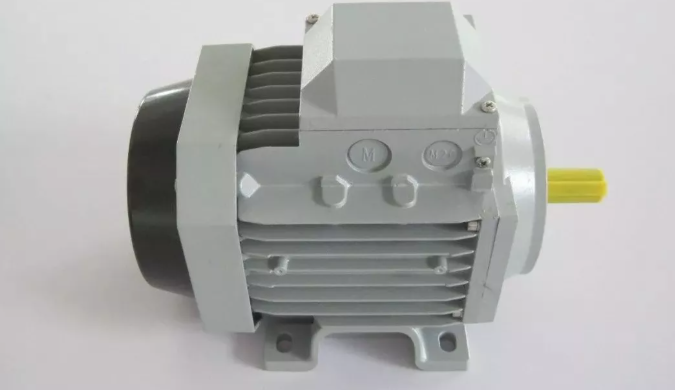
The test data mentioned here refers to no-load current, no-load loss, locked rotor current, and locked rotor loss. The theoretical relationship between these and several key performance parameters of the motor is as follows.
(1) A large no-load current results in a low power factor.
(2) If the no-load loss is large, the efficiency will be low.
(3) If the locked rotor current is large, the locked rotor current at rated voltage may exceed the assessment standard; if the locked rotor current is small, the locked rotor torque at rated voltage may not meet the standard requirements, because the locked rotor torque is directly proportional to the locked rotor current.
(4) If the stall loss is large, the efficiency will be low; if the stall loss is small, the maximum torque may not meet the standard requirements, because the maximum torque is directly proportional to the stall loss.
● Qualified Area Method
By using the principles of motors and mathematical calculations, a series of relationships are derived. Then, the prototype test data and the evaluation standard values are substituted into these relationships to obtain several control formulas.
In practice, the measured data is then substituted into the corresponding control formula to comprehensively determine whether the motor is qualified. This method is called the "qualified zone method." Theoretically, this method has high control accuracy, but it is cumbersome to calculate and use, and sometimes it can cause misjudgments due to the large range given by the standard. Therefore, it is rarely used now.
● Upper and Lower Limit Method
Based on the test data of qualified prototypes and the evaluation standards, the highest and lowest limits, or allowable fluctuation ranges, of each test data are given for factory shipment. This is called the single-value "upper and lower limit method." Compared with the first method, although the control precision is slightly lower, the calculation and use are much simpler, so it is more widely used. The following focuses on its formulation principles and steps.
(1) Collect as much type test data as possible from qualified prototypes and calculate the average value and fluctuation range (maximum and minimum value) of each relevant item.
(2) For the no-load current, if the power factor corresponding to the above maximum value has reached the minimum limit of the assessment, then the maximum value is the maximum limit of the no-load current in the factory standard. No minimum limit is set for the no-load current. If it is deemed necessary (for example, to prevent the use of the wrong rotor or the small air gap from causing rotor rubbing), the minimum value of the no-load current calculated above can be relaxed (for example, relaxed by 3%) as the minimum limit of the no-load current in the factory standard.
(3) No-load loss can be set to a maximum limit. Considering that this value is greatly affected by factors such as running time and natural test environment (mainly ambient temperature) during simple factory tests, it can be increased by about 10% based on the maximum value of the above prototype data. If the value is higher than the given maximum value standard during factory tests, the running time of the motor should be appropriately extended to obtain a more stable no-load loss before comparison and judgment.
(4) The test environment conditions have little impact on the values of locked rotor current and locked rotor loss. Therefore, the upper and lower limits should be strictly controlled according to the statistical values of the prototype. If calculated based on the statistical average value of the prototype, it is recommended that the locked rotor current be 95% to 105% of the statistical average value of the prototype; and the locked rotor loss be 90% to 110% of the statistical average value of the prototype.
(5) It is particularly important to emphasize that some motor manufacturers conduct inspection and testing before installing the fan cover, while type testing is conducted after the complete machine is fully assembled. Therefore, the determination of loss value should be adjusted as necessary to achieve an objective judgment.
 XINDA
XINDA