














A Brief Discussion on High-Speed Motors
Introduction: High-speed motors are motors that can operate at high speeds. They are characterized by high speed, high power density, and high efficiency, and are widely used in aerospace, automotive, and machinery manufacturing industries.
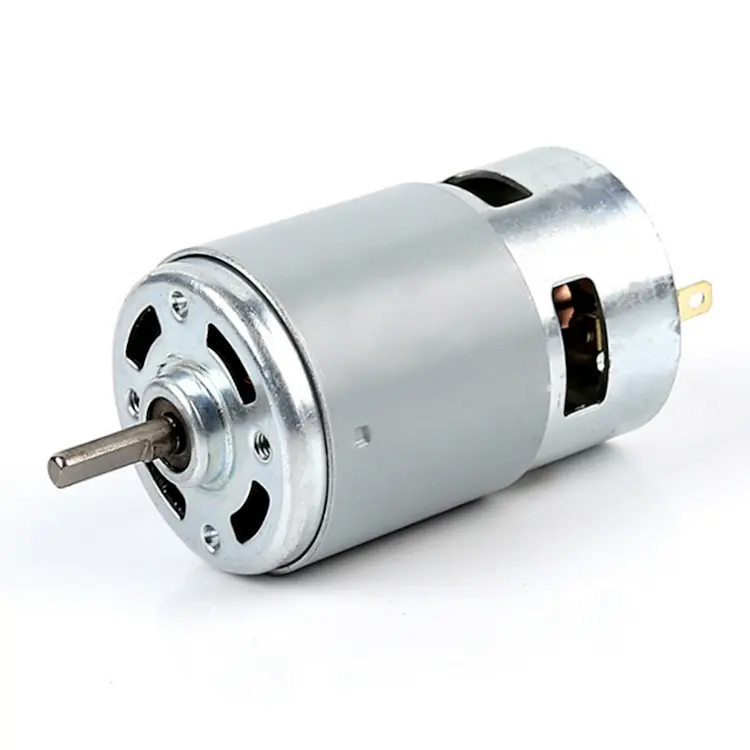
A high-speed motor is a type of motor that typically operates at speeds exceeding 10,000 revolutions per minute , significantly surpassing the speed of traditional motors. It has the following main characteristics:
The motor has a high power density, and its volume is much smaller than that of an ordinary motor of the same power, which can effectively save raw materials.
It can be directly connected to the prime mover, eliminating the need for a traditional reduction gear, resulting in high transmission efficiency and low noise.
High-speed motors have low rotational inertia and fast dynamic response. Currently, the main types of motors successfully achieving high speeds are induction motors, permanent magnet motors, and switched reluctance motors. When determining the structural form of a high-speed motor, a comprehensive comparative study of its electromagnetic and mechanical characteristics is necessary. Considering power density and efficiency, the order of selection is permanent magnet motor, induction motor, and then reluctance motor; from the perspective of rotor mechanical characteristics, the order is reluctance motor, induction motor, and then permanent magnet motor. Currently, permanent magnet motors are more commonly used for small and medium power high-speed motors, while induction motors are more commonly used for medium and high power high-speed motors.
|
Main types of high-speed motors |
Induction motor |
permanent magnet motor |
Switched reluctance motor |
|
advantage |
The rotor has a relatively simple structure, is resistant to high temperatures, and has a low cost. The solid rotor can withstand large centrifugal forces; the power density is moderate. |
It has high efficiency and power factor, high power density, diverse stator and rotor structures, and good control characteristics. |
It has moderate efficiency, high temperature resistant rotor, simple rotor structure, short winding ends, and low cost. |
|
shortcoming |
The rotor has high losses, low efficiency, and low power factor; the end rings of laminated rotors are easily damaged, while solid rotors have high eddy current losses. |
Permanent magnets have low tensile strength, the rotor structure has a protective sleeve, the processing is relatively complex, permanent magnet rotors are prone to irreversible demagnetization at high temperatures, and the cost is relatively high. |
It has high noise, large torque fluctuations and large mechanical vibrations; large rotor wind wear, requires precise rotor position signals, and has complex control of torque and current. |
Comparison of the advantages and disadvantages of three main types of high-speed motors
The structure of high-speed motors differs from that of conventional motors. The design focuses on the special requirements of high-speed operation on rotor strength, bearing adaptability, loss and heat dissipation.
Bearing design: High-speed motors typically employ high-performance bearing structures such as air film bearings or magnetic levitation bearings to reduce friction and wear, and improve speed and lifespan.
Rotor design: The rotor of a high-speed motor needs to have high strength and rigidity. It is usually made of lightweight materials such as aluminum alloy or carbon fiber composite materials to reduce rotor weight and improve speed and response speed.
Insulation design: The insulation system of high-speed motors needs to have higher withstand voltage and heat resistance to prevent insulation breakdown or thermal failure during high-speed operation.
The high-speed motor rotor assembly is the core component of these motors, consisting of a rotor shaft, magnets, a mounting sleeve, and other structural elements, all designed to withstand extreme speeds, minimize energy loss, and ensure optimal performance under high mechanical and thermal stress.
High-speed motors are widely used in various applications, such as centrifugal compressors in air conditioners and refrigerators. With the development of science and technology, and the increasing number of specialized equipment requirements, the application of high-speed motors will become even more widespread. They show particularly promising application prospects in fields such as hybrid vehicles, aviation, and shipbuilding. Rotor surface magnetism and flux measurement are core quality control points in the research and development and production of high-speed motors, directly affecting the stability and reliability of motor performance, and are an important support for promoting the industrialization of this technology.
 XINDA
XINDA