










Insulation protection requirements for motors operating in special environments
There are many types of motors that operate in special environments. Based on the environmental conditions, common types include motors used in tropical, high-altitude, chemical, marine, automotive, coal mining, and metallurgical environments. Motor insulation is extremely sensitive to specific operating environmental conditions. For example, in tropical, high-altitude, or other special environments, the reliability and lifespan of the insulation will be greatly reduced. Therefore, today Ms. Can will focus on discussing the protective measures that should be taken for motors operating in special environments.
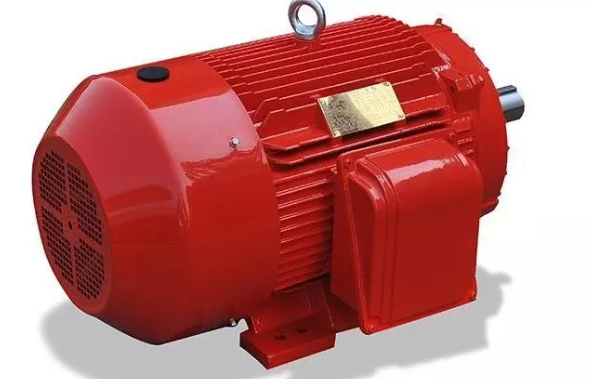
● For protection against moisture, bacteria, solar radiation, salt spray, and industrial atmospheric corrosion, the primary approach should be to select appropriate materials, supplemented by good metal surface protection and insulation treatment processes. When the above measures are insufficient, structural sealing measures can be considered.
●For measures to protect against solid foreign objects, rainwater, and corrosive chemical gases, the primary focus should be on sealing the outer casing, supplemented by necessary material selection and process treatment measures.
● For vibration prevention, the vibration source should be minimized or the natural frequency of the system should be adjusted to avoid resonance. If this is not enough, vibration damping devices and vibration isolation measures should be used.
●Insulation protection measures for tropical motors
The main considerations are material selection and insulation process. For insulation materials used in motors operating in humid tropical regions, in addition to meeting basic requirements such as heat resistance rating, operating voltage, mechanical stress, and insulation structure compatibility, the following points should also be noted:
(1) Material selection
Use inorganic insulating materials such as fiberglass, asbestos, stone, and mica whenever possible; organic insulating materials, as well as those with good mildew resistance and moisture resistance after treatment. When using new materials, the products should undergo damp heat testing or other relevant media tests to ensure they meet moisture resistance or other relevant requirements before use.
(2) Insulating parts
Epoxy phenolic laminates with fillers such as glass fiber, asbestos, and mica should be selected. All insulating parts should be impregnated. Wood should be avoided for grooves or padding. Bamboo wedges must be treated with transformer oil before they can be used in small motors.
(3) Effects of ultraviolet radiation
Materials that are severely affected by ultraviolet radiation, such as industrial rubber, ordinary polyvinyl chloride, and polyethylene, should be avoided. Instead, nitrile butadiene rubber, butyl rubber, or tropical polyvinyl chloride should be used whenever possible.
(4) Impregnation material
For E and B class insulation, epoxy resin varnish can be used; for F and H class insulation, silicone organic varnish or polyimide varnish can be used.
(5) The insulation material used in motors in humid tropical regions should preferably be anti-mold material. If non-mold-resistant material is required, anti-mold measures must be taken.
Special note: Anti-mold agents are toxic to humans. When performing anti-mold treatments, take extra precautions to protect yourself from harm.
(6) Impregnation
Vacuum pressure impregnation, drip impregnation, and overall impregnation processes with good moisture resistance should be used whenever possible. During the baking process, the varnish base must be completely cured. In addition, epoxy powder fusion insulation also has good moisture resistance.
●Insulation measures for outdoor motors
Outdoor motor protection primarily focuses on structural protection to prevent the intrusion of small animals, rain, snow, and sand. The quality of the casing's sealing depends on the treatment of the shaft extension and wiring. Outdoor motor bearings should be equipped with water-slinging rings; the mating surface between the junction box and the base should be wide and flat, with a sealing gasket placed between them; the inlet cable should have a sealing sleeve; the end cover stop and lifting hole should have rubber gaskets; and the fastening screws should be countersunk screws with sealing washers. Outdoor motor ventilation should be designed to prevent the entry of wind, snow, or foreign objects. Ventilation ducts can be used, or baffles can be installed in the air duct to separate rain, snow, and sand particles. In dusty areas, dust filters can be added.
In addition to selecting appropriate insulation materials and employing correct insulation treatment processes to form a complete protective layer on the insulation surface, sunshades can be installed on the top of the casing for protection against sunlight. A certain distance should be maintained between the sunshade and the casing to avoid direct heat transfer. In recent years, cooling boxes have often been placed on top of the stator. To prevent condensation on the motor, a moisture-proof heater can be installed. Outdoor motors can be treated similarly to tropical motors for insulation.
In recent years, the development of new insulation materials and processes has enabled the reliable sealing of motor windings without the need to seal the entire motor. Many countries have adopted protective designs instead of fully enclosed designs. Protective outdoor motors can use sealed windings, which are made of non-hygroscopic insulation materials and magnet wire. The stator windings are assembled and then impregnated using a drip-impregnation or integral impregnation process, sealing the windings and joints completely, preventing contamination and adapting to outdoor environmental conditions.
For outdoor motors, surface coatings with good resistance to light aging should be selected, with white being the best and silver-white the next best. Special attention should be paid to the light aging performance of plastics used outdoors. At low temperatures, plastics and greases are prone to becoming brittle or solidifying; therefore, materials with good cold resistance should be selected.
●Insulation protection measures for chemical corrosion resistant motors
Chemical plant corrosion-resistant motors, whether installed indoors or outdoors, must possess moisture-proof and corrosion-resistant properties. Modern chemical plant equipment tends towards large-scale and open-air operation. Continuous production often means that once equipment is running, it cannot be shut down for maintenance for extended periods. Therefore, motors used in chemical plants have higher protection requirements. On top of outdoor models, corrosion resistance must be further enhanced. The structural design should strengthen the sealing of the casing. If the casing must retain water outlets, they must be sealed with plastic screws. For sealed motors, the main passage for air circulation is the bearings. A sealing structure with a waterproof curved ring can effectively provide protection. Large motor bearings should be designed for oiling and changing without stopping the machine to meet the requirements of continuous production in chemical plants. Exposed parts should preferably be made of stainless steel and plastic.
For chemical corrosion-resistant motors, the insulation measures under the protection of a sealed casing can be similar to those for tropical motors. High-voltage motors can use continuous epoxy powder and mica tape insulation or silicone rubber insulation.
 XINDA
XINDA