














How much do the vibrations and noise of different types of motors relate to the air gap?
The air gap is a crucial element in motor products, ensuring the relative physical independence of the stator and rotor, and is an important component of the motor's magnetic circuit. The size and uniformity of the air gap directly affect the performance indicators of the motor. Theoretically, the air gap of a motor is determined by the inner diameter of the stator laminations and the dimensions of the rotor after machining. The air gap size is given during the product design phase. When the air gap changes due to certain factors, it will lead to changes in some performance indicators directly related to the air gap.
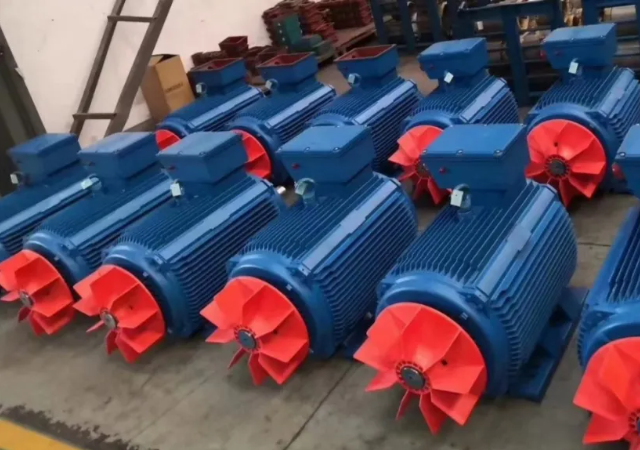
When the air gap of a motor increases, it reduces the stator and rotor harmonic leakage reactance and skew slot leakage reactance, and decreases the reactive current. However, the positive impact on the power factor is far less than the negative effect of the increased excitation current. It also has a certain impact on the motor's efficiency. In addition, the size and uniformity of the air gap also affect the motor's vibration and noise to varying degrees.
The air gap of an asynchronous motor is relatively small, and the size and uniformity of the air gap have a significant impact on the motor's performance. In contrast, the air gap of a permanent magnet synchronous motor is larger, resulting in a smaller relative error and thus a smaller impact on the motor's performance.
To address this issue, we started by analyzing the stator rubbing failure of the motor. When the coaxiality or machining dimensions of motor components do not match, the stator and rotor will become misaligned after assembly. The end result is uneven air gap, which can lead to mechanical failure due to stator-rotor rubbing in severe cases. Even before the stator rubbing becomes severe, there is a noticeable low-frequency electromagnetic noise after the motor is powered on; the higher the voltage, the more pronounced the noise. To solve the uneven air gap problem, it is necessary to strengthen the control of dimensional tolerances and coaxiality requirements of related motor components. If necessary, the relative uniformity of the air gap may need to be adjusted by modifying the air gap itself, but the ultimate consequence is an increase in the overall air gap of the motor.
Compared to asynchronous motors, permanent magnet synchronous motors have a larger air gap, so the degree of air gap unevenness caused by the manufacturing process is generally smaller, and therefore will not have a significant impact on its vibration and noise.
 XINDA
XINDA