












The working principle and usage of a pellet stove
Date:2025-11-20 Author:Shandong Xinda Motor Co., Ltd.
Okay, let's take a closer look at the working principle and usage of a pellet stove.
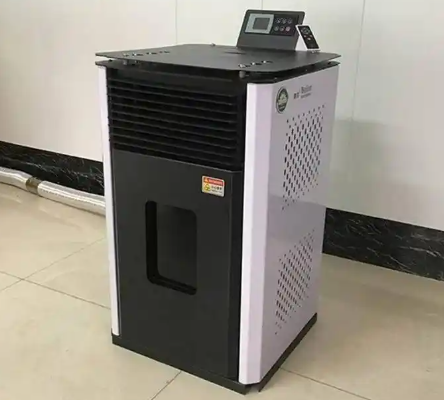
A pellet stove is a highly efficient and environmentally friendly heating device that uses biomass pellet fuel. It combines the aesthetics of a traditional fireplace with the convenience of modern technology.
I. Working Principle
The working principle of a pellet fireplace can be summarized as: automatic feeding + efficient combustion + forced convection + intelligent control.
1. Fuel (Biomass Pellets):
· The fuel is usually cylindrical wood pellets, compressed from wood chips, sawdust, agricultural waste, etc., making it very environmentally friendly.
· The pellets are stored in a hopper.
2. Automatic Feeding System:
· An adjustable-speed screw feeder (auger) slowly and precisely pushes the pellets from the bottom of the hopper into the combustion chamber.
· The feeding speed is usually set by the control panel, determining the fire size and heat output.
3. Ignition and Combustion:
· Automatic Ignition: Most modern pellet fireplaces have an automatic ignition function. Typically, a heating wire, when energized, becomes incandescent and ignites the first batch of pellets falling from the feeder.
· Combustion Process: Air is forced into the combustion chamber by an intake fan (combustion fan), providing the necessary oxygen for combustion. By precisely controlling the feed rate and airflow, the pellets achieve very complete and efficient combustion, producing very little smoke and ash.
4. Heat Exchange and Distribution:
· A heat exchanger surrounds the combustion chamber. The heat generated by the flame is absorbed by the metal heat exchanger.
· A convection fan (room fan) draws in cool air from the room, forces it to flow over the heated surface of the heat exchanger, turning it into hot air before blowing it back into the room.
· This forced convection method is far more thermally efficient than the natural radiant convection of traditional wood fireplaces.
5. Exhaust:
· The exhaust gases produced by combustion are discharged outdoors by an exhaust fan through a small exhaust pipe. Due to the high combustion efficiency and low exhaust gas temperature, the exhaust pipe can be made of a less expensive material (such as PVC pipe).
6. Intelligent Control System:
· This is the brain of the pellet fireplace. Users set the desired temperature or heat level via the control panel or remote control.
· A temperature sensor or thermostat monitors the room temperature and automatically adjusts the feed rate and fan speed to maintain the set temperature, enabling convenient "set and forget" operation.
---
II. Usage Instructions
Using a pellet fireplace is very simple; just follow these steps:
Preparation for First Use or Long-Term Inactivity
1. Professional Installation: Ensure the fireplace is correctly installed by a professional, especially the exhaust pipe and electrical connections.
2. Cleaning and Inspection: Clean any packaging residue or ash buildup in the combustion chamber and ash box.
3. Fill the Hopper: Add high-quality wood pellets to the hopper. Never use wet, damp, or unspecified fuel.
Daily Start-up Operation
1. Turn on the Power: Plug the fireplace into the power switch.
2. Setting Parameters: Select your desired operating mode via the control panel or remote control:
* **Firepower Level/Heat Output:** Typically has 1-5 levels or higher; the higher the number, the stronger the fire and the higher the heat output.
* **Constant Temperature Mode:** Set a target room temperature; the fireplace will automatically operate until it reaches and maintains that temperature.
3. Starting the Ignition: Press the "Start" or "Ignition" button. You will hear the feeder and fan start working. Within minutes, the pellets will ignite, and a flame will begin to form.
4. Enjoy the Warmth: After 10-20 minutes, the fireplace will enter full-power operation, and the room will gradually warm up.
Adjustments and Precautions During Operation
* You can adjust the firepower or set the temperature at any time.
* You can enjoy the flames, but never open the combustion chamber door unless the fireplace has completely extinguished and cooled down. Opening the door while the fireplace is running will allow smoke to enter the room.
* Ensure there are no flammable materials around the fireplace and keep the vents unobstructed.
Shutdown Procedure
1. Select Shutdown Mode: Press the "Shutdown" or "Stop" button.
2. Cooling Cycle: The fireplace will enter the shutdown procedure:
· The feeder will first stop feeding pellets to allow the remaining fuel in the combustion chamber to burn completely.
· The combustion fan and exhaust fan will continue to run for a period of time (usually 10-30 minutes) to cool the combustion chamber and expel any remaining exhaust gases.
· The convection fan may also continue to run to aid in heat dissipation.
3. Complete Shutdown: After the cooling cycle is complete, all fans will stop, and you can turn off the main power. For safety, it is recommended not to leave the house until the fireplace has completely cooled down.
Routine Maintenance
1. Regularly Clean the Ash Box: Depending on usage frequency, the ash box usually needs to be cleaned every 1-3 days. Excessive ash buildup will affect combustion efficiency.
2. Clean the Combustion Chamber: Clean the ash from the combustion chamber weekly or every 40-80 hours of use.
3. Clean the Glass: Use a specialized fireplace glass cleaner and a soft cloth to clean soot from the viewing window. 4. Regular Deep Cleaning: Before and after each heating season, it is recommended to thoroughly clean the internal heat exchanger, flue, and all fans, preferably by a professional.
Advantages Summary
• High Efficiency and Energy Saving: Thermal efficiency can reach 80%-90%, far exceeding that of traditional wood fireplaces.
• Convenient to Use: Automatic ignition, automatic fuel feeding, and temperature control make operation simple.
• Environmentally Friendly and Clean: Pellet fuel is made from renewable resources, ensuring complete combustion and near-zero carbon emissions.
• Safe: Combustion is conducted in a closed system, preventing sparks from flying out. Surface temperatures are typically lower than in traditional fireplaces.
Hopefully, this detailed explanation will help you better understand and use pellet stoves!
 XINDA
XINDA