















The structure and working principle of a coffee roaster
Date:2025-11-22 Author:Shandong Xinda Motor Co., Ltd.
I. Core Structure
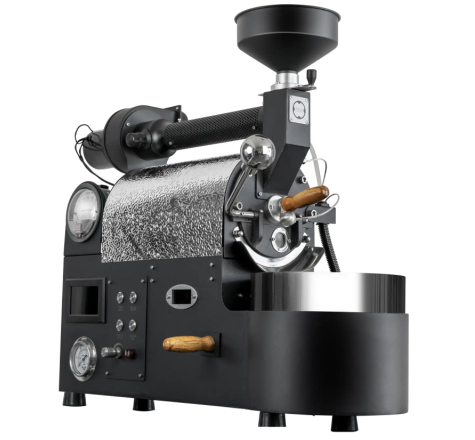
A typical professional semi-hot air roaster mainly consists of the following parts:
1. Green Bean Silo
· Location: Top of the machine.
· Function: Stores green coffee beans to be roasted. It usually has an adjustable gate to control the speed and flow of green beans into the drum.
2. Drum
· Location: The core of the machine, surrounded by the burner and insulation.
· Function: A rotating metal cylinder with blades inside. Its functions are:
· To carry and tumble the coffee beans, ensuring even heating.
· To conduct heat (from the heated drum walls).
· Material: Usually steel or cast iron, with good thermal conductivity and durability.
3. Heating System (Burner)
· Location: Surrounding the outside of the drum. • Function: Provides a heat source. Fuel can be natural gas or liquefied petroleum gas. The heat intensity can be precisely controlled by adjusting the gas valve and damper.
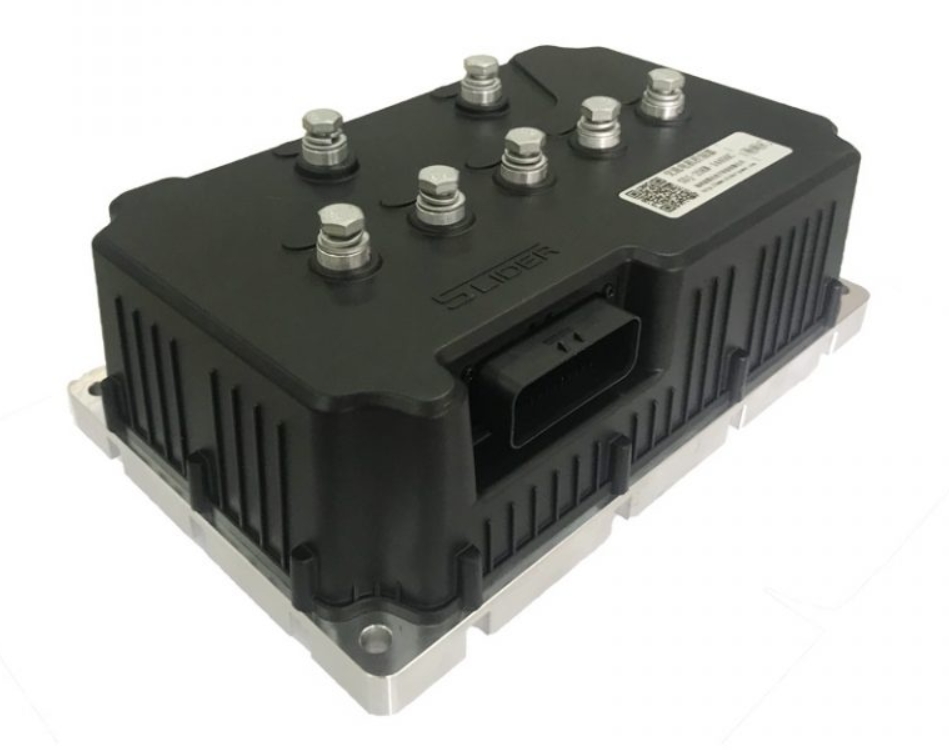
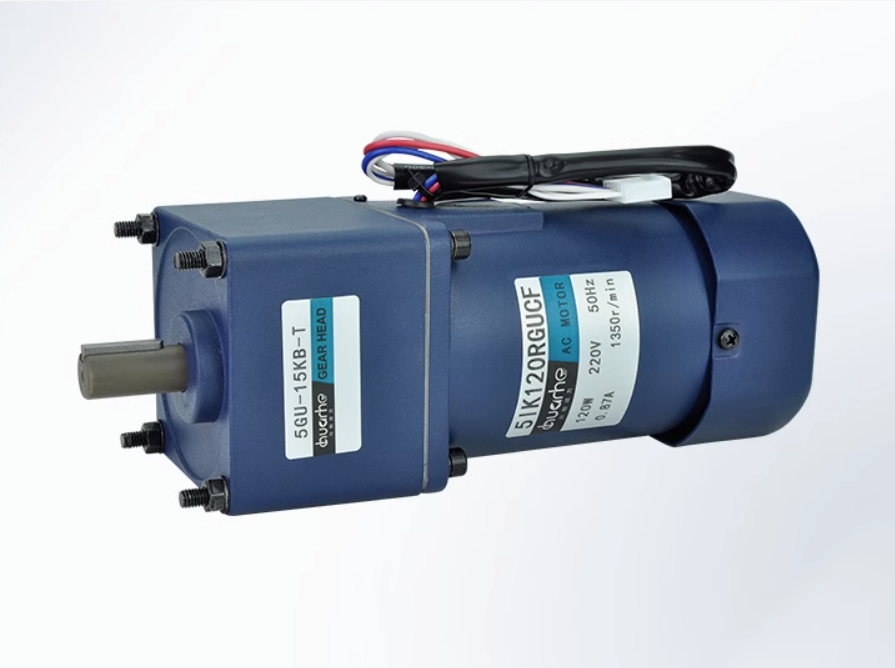
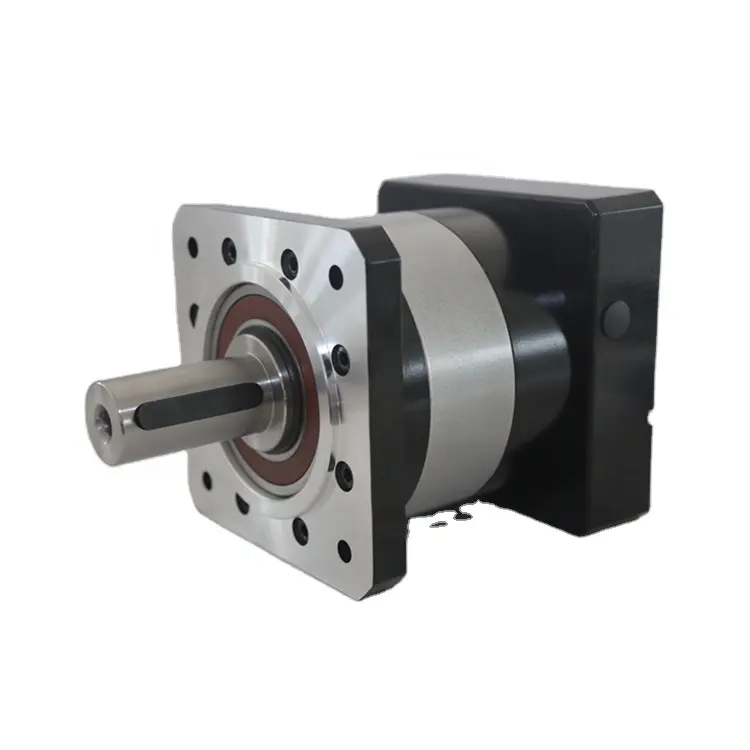
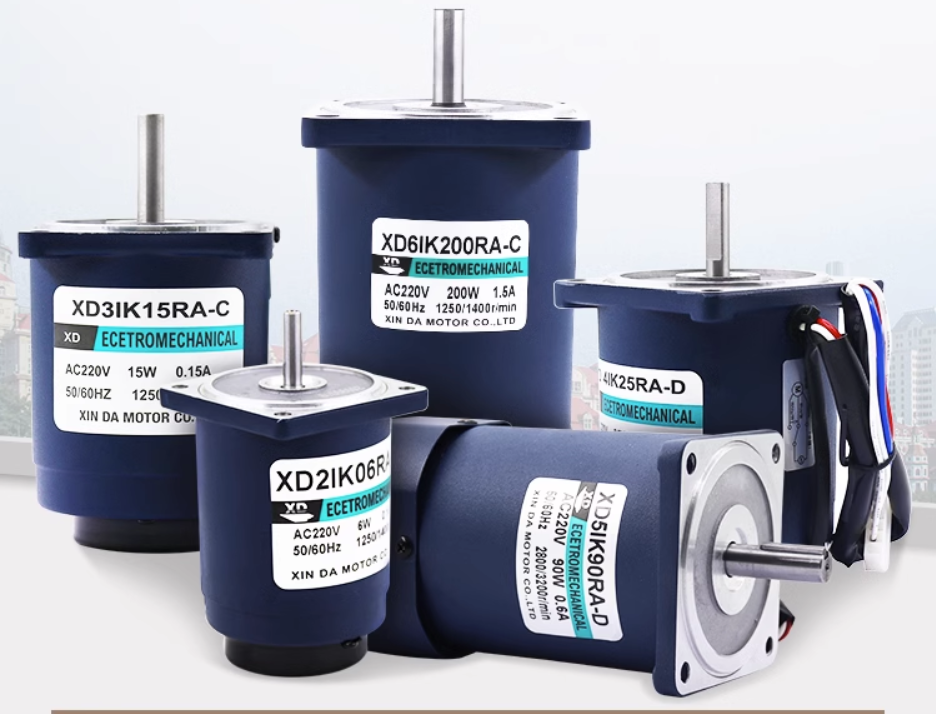
4. Motor and Transmission System
• Function: Drives the drum rotation. The motor drives the drum via a belt or gear, maintaining a stable speed to ensure even tumbling of the coffee beans.
5. Air Duct and Fan
• Function: This is the key to the "semi-hot air" system.
• Fan: Generates suction.
• Air Duct: After being drawn in, air is heated by the burner and then enters from the front of the drum, contacting the coffee beans and creating convection heating. Finally, the hot air, carrying the silverskin and other debris from the coffee beans, is extracted from the rear of the drum.
6. Cooling System
• Location: Usually a separate cooling tray, located at the front or side of the machine.
• Function: After roasting, the coffee beans are quickly poured into the cooling tray. A powerful cooling fan draws in room temperature air, passes it through the coffee beans, and cools it from around 200°C to room temperature within 3-5 minutes, forcibly stopping the chemical reaction and locking in flavor.
7. Dust Collection Bin/Silver Skin Collector
• Function: Located on the exhaust duct, it collects the light silver skin and debris that falls off the coffee beans and is carried away by the airflow, preventing them from clogging the air duct and polluting the environment.
8. Control System and Sensors
• Temperature Sensors:
• Ambient Temperature Probe: Measures the temperature of the hot air inside the drum.
• Bean Temperature Probe: Inserted directly into the bean pile to measure the real-time temperature of the coffee beans themselves. This is the most critical data for plotting the roasting profile.
• Control Panel: Includes gas valves, air damper valves, drum speed control (available on some models), and a modern computer interface for setting and monitoring roasting parameters.
---
II. Detailed Working Principle (Taking a Semi-Hot Air Roasting System as an Example)
Coffee roasting is a process that precisely controls heat energy to trigger hundreds of chemical changes in coffee beans, including the Maillard reaction and caramelization. The working principle can be broken down into the following stages and corresponding machine operations:
Stage 1: Bean Feeding and Heat Absorption
· Process: The gate is opened, and green beans (at room temperature) fall into the preheated drum. At this time, the bean temperature probe shows a sudden drop in temperature.
· Machine Role: The roaster needs to apply sufficient heat to allow the machine and beans to quickly absorb heat and regain temperature. The heat energy in this stage is mainly used to evaporate the moisture in the green beans.
Stage 2: Dehydration Stage
· Process: Under continuous heating and tumbling, the beans gradually change from green to pale yellow, emitting a grassy aroma. Moisture inside the beans continuously evaporates.
· Machine Role: The rotation of the drum ensures that all beans lose moisture evenly; the damper is usually kept at a small opening to accumulate heat energy.
Phase Three: Maillard Reaction and Caramelization
• Process: When the bean temperature reaches approximately 150°C, the core chemical reaction phase begins.
• Maillard Reaction: Amino acids and sugars within the bean react to produce compounds such as melanoidins and pyrazines, contributing to the coffee's body, aroma, and brown appearance.
• Caramelization: Sugars decompose at high temperatures, producing sweetness, bitterness, and caramel flavors.
• Machine Role: The roaster needs to precisely adjust the heat and airflow according to the target flavor profile. Increasing the airflow removes spiciness and excess heat from the drum, preventing overly rapid development; decreasing the heat slows the reaction, allowing for more complete flavor development.
Phase Four: First Crack
• Process: When the bean temperature reaches approximately 190-205°C, the high pressure generated by the evaporation of moisture causes the cellulose structure to break, producing a popping sound similar to popcorn. This is a milestone in the roasting process.
• Machine Role: The first crack releases a large amount of heat. Roasters typically need to appropriately reduce the heat and adjust the airflow to control the rate of temperature increase; otherwise, the beans are prone to burning.
Stage Five: Development Stage
• Process: After the first crack, coffee beans enter a phase of rapid flavor development. The roaster decides when to remove the beans from the roaster, which directly determines the roast level (light, medium, or dark).
• Machine Role: Controlling the heat and airflow is crucial. Light roast beans, aiming for acidity and floral/fruity aromas, may be removed immediately after the first crack; medium-dark roast beans, aiming for body and chocolate notes, will continue to develop, even entering a second crack.
Stage Six: Cooling and Removal
• Process: After reaching the target roast level, the roaster opens the drum gate, and the coffee beans are poured into the cooling tray.
• Machine Role: The cooling system operates at full capacity, cooling the beans in the shortest possible time, forcibly stopping all chemical reactions and locking in the newly developed flavors.
---
Summary: Three Modes of Heat Transfer
In a roaster, coffee beans are heated simultaneously through three methods:
1. Conduction: The coffee beans transfer heat through direct contact with the hot drum walls, agitator blades, and other coffee beans. This helps develop body.
2. Convection: Hot air flowing within the drum heats the coffee beans. This is the primary heat transfer method in semi-air-fired roasters, ensuring more even heating and removing unwanted substances.
3. Radiation: The burner flame and hot metal components radiate heat in the form of infrared rays.
The art of roasting lies in balancing these three modes of heat transfer by controlling the heat output (gas valve), air dampers, and drum speed, thereby guiding the coffee beans towards the desired flavor profile. This is the essence of the structure and working principle of a coffee roaster.
 XINDA
XINDA