











Motor Selection for the Food Machinery Industry
Date:2025-12-07 Author:Shandong Xinda Motor Co., Ltd.
The selection of food processing machinery and motors is a crucial engineering issue, directly impacting equipment performance, energy consumption, reliability, and production costs. It's a systematic project requiring comprehensive consideration of multiple factors.
Below is a detailed selection guide and steps; you can follow this logical framework to make your decision.
Part One: Food Processing Machinery Selection (Determining the Main Unit First)
Before considering the motor, the requirements of the machinery itself must be clearly defined.
1. Define Process Requirements and Product Characteristics
• Process Purpose: Is it mixing, conveying, cutting, extruding, heating, or cooling?
• Material Characteristics:
• Physical Properties: Viscosity (e.g., dough, sauces), density, particle size, moisture content, coefficient of friction.
• Chemical Properties: Acidity/alkalinity, corrosiveness (determines the material of contact parts, such as 304/316 stainless steel).
• Hygiene Requirements: Does it directly contact food? What standards must it comply with (e.g., FDA, EU 1935/2004)? Is an easy-to-clean design required (no hard-to-clean areas, quick-opening structure)?
2. Determine Key Mechanical Parameters
• Capacity: Processing capacity per hour or shift (kg/h, L/h). This is the core factor determining the equipment's scale.
• Operating Mode: Continuous or batch? Continuous operation requires higher stability and automation.
• Equipment Dimensions and Structure: Determined based on capacity and installation site.
• Design of Core Working Components: For example, the shape of the agitator (anchor, spiral, turbine), the pitch and diameter of the conveyor screw, the cutting edge angle and speed of the cutter, etc. These designs directly determine the load characteristics.
3. Focus on Hygiene and Safety Standards
• Materials: Contact parts must use food-grade stainless steel (e.g., 304, 316L), with required surface finish (typically Ra ≤ 0.8 μm).
• Design: Avoid sharp corners and gaps; use rounded transitions for easy disassembly and cleaning. Seals must be made of food-grade silicone, EPDM, etc.
• Certifications: Check if the equipment has relevant hygiene design certifications (e.g., EHEDG, 3-A). 4. Assess Energy Consumption and Operating Costs
* Energy Efficiency Ratio: What is the energy consumption per unit output?
* Ease of Maintenance: Is it easy to inspect and replace vulnerable parts?
* Spare Parts Commonality: Standard parts or custom-made non-standard parts?
---
Part Two: Motor Selection (Matching the "Heart" of the Determined Machinery)
The motor is the drive source; improper selection can lead to insufficient power, overheating, damage, or excessive energy consumption.
1. Determine the Core Performance Parameters of the Motor
These parameters need to be calculated from the mechanical load:
* Power: The most critical parameter. It must be calculated based on the load, with a margin of safety.
* Calculation Basis: The work done to overcome friction, lift materials, cut resistance, and fluid mixing resistance.
* Safety Margin Factor: Food processing loads often fluctuate (e.g., changes in dough hardness), generally requiring an additional 10%-25% safety margin. This avoids energy waste due to overloading ("using a large motor for a small load") and overload damage ("using an underloaded motor for a large load"). • Speed and Speed Regulation Requirements:
• Fixed Speed: Conveyors, fans, etc.
• Speed Regulation Required: Mixing materials of different viscosities, adjusting production line cycle time. In this case, a combination of a variable frequency motor and a frequency converter is required.
• Torque: Especially starting torque and running torque. For loads with high starting resistance (such as directly started screw conveyors and heavy-duty mixers), it is important to ensure the motor's starting torque is sufficient. Variable frequency starting can improve this.
• Duty Cycle: Food machinery commonly uses S1 (continuous duty) or S3 (intermittent periodic duty). For continuous operation, an S1 duty cycle motor must be selected.
2. Selecting the Motor Type
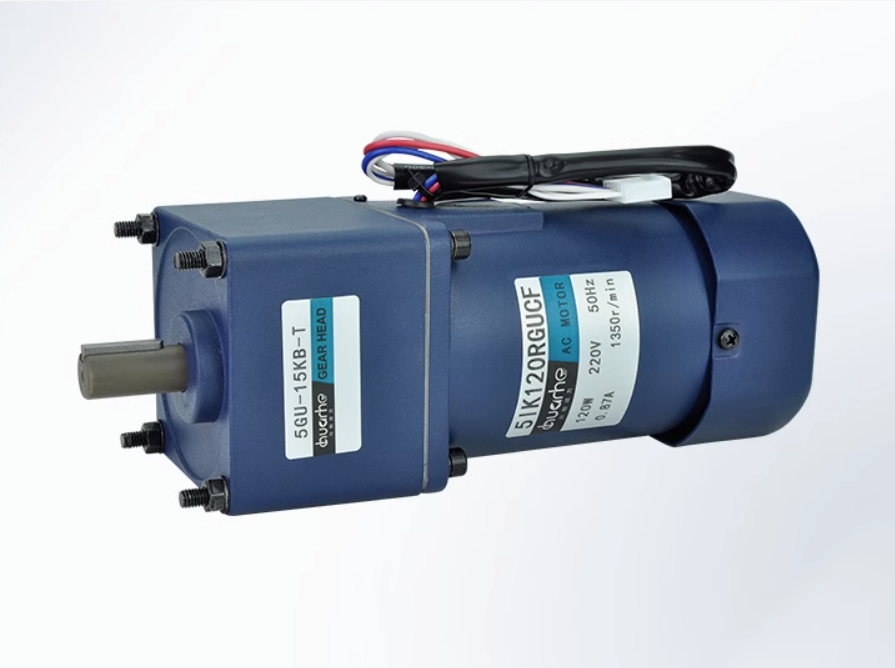
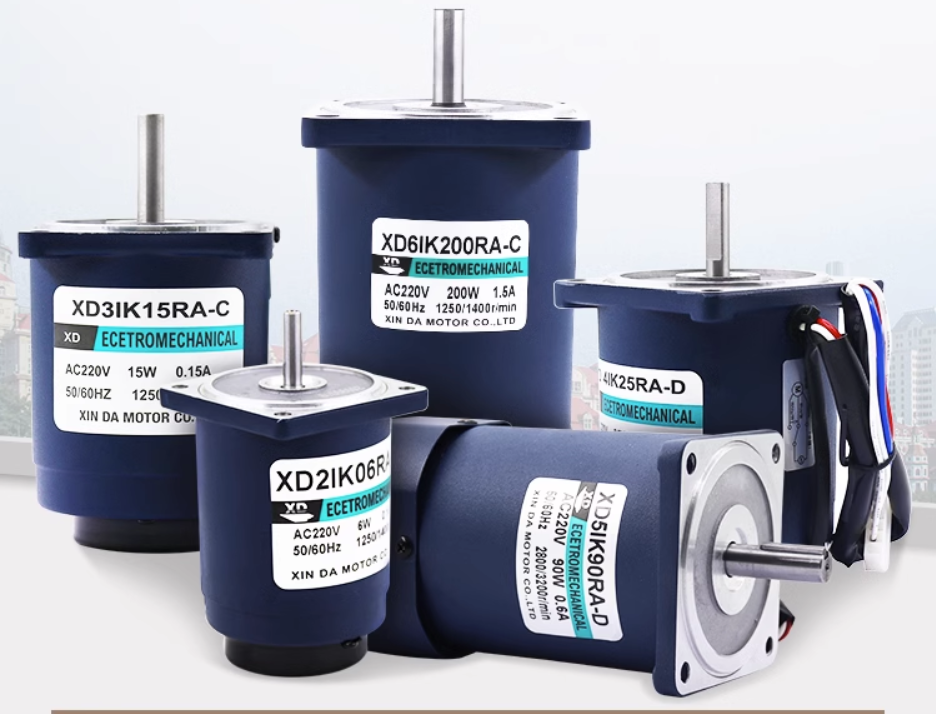
• AC Asynchronous Motor: The most commonly used, simple in structure, robust and durable, and low in cost. It is the first choice for most pumps, fans, conveyor belts, and ordinary mixers.
• Variable Frequency Motor: Built-in independent cooling fan, capable of long-term operation at low speeds without overheating. It is strongly recommended to use it for all applications requiring speed regulation, rather than a regular motor with a frequency converter.
* **Servo Motors:** Used in applications requiring extremely high positional and speed precision, such as high-speed precision filling, sealing, and robotic palletizing. High price and complex control.
* **Explosion-proof Motors:** Used in environments handling flammable dust (such as flour, starch, and milk powder) to prevent explosions.
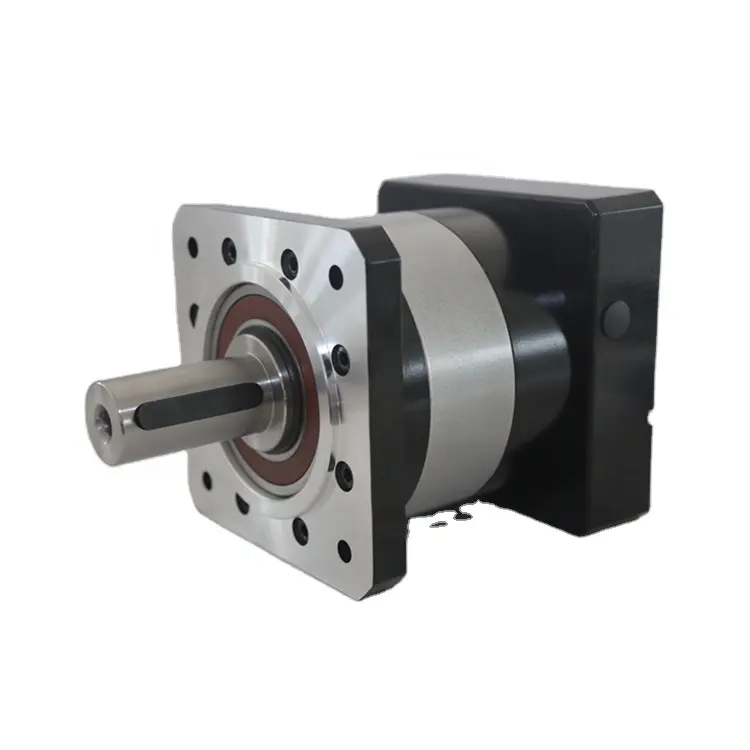
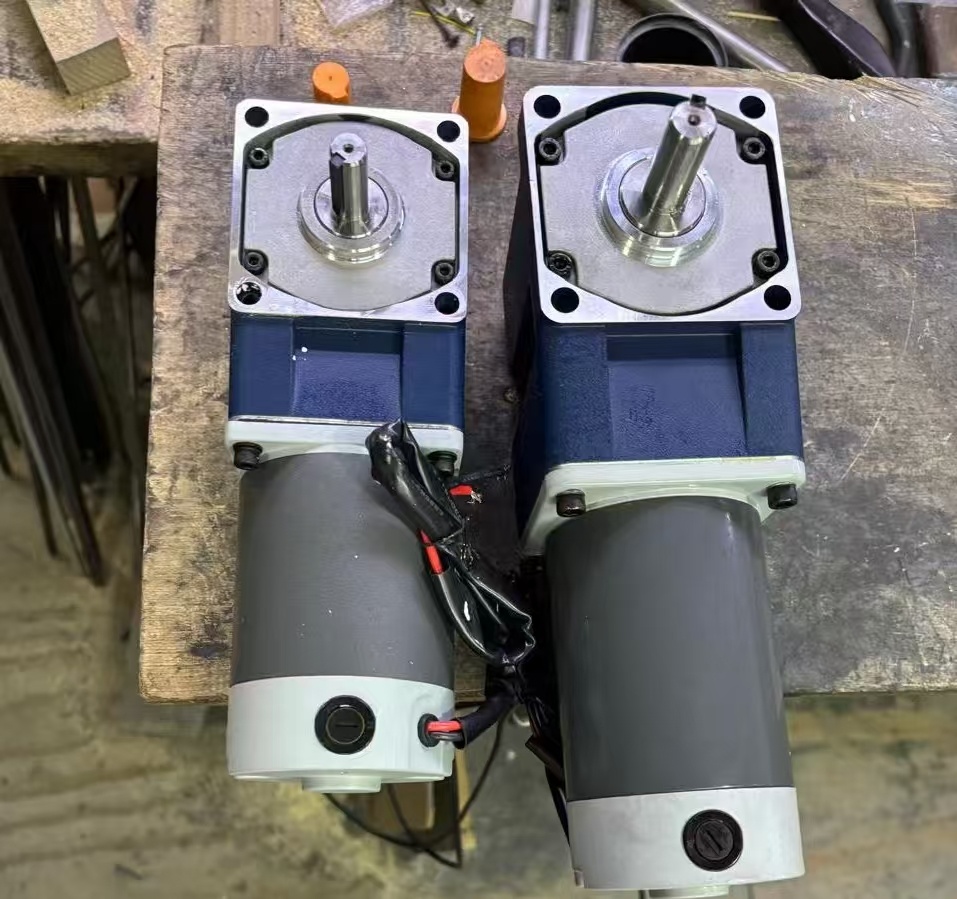
3. **Matching the Reduction Mechanism:** Most food processing machinery operates at speeds far lower than the motor speed, requiring a reducer.
* **Reducer Types:** Gear reducers (high precision, high torque), cycloidal pinwheel reducers (impact resistant), worm gear reducers (high speed ratio, self-locking). Hygienic reducers with smooth, corner-free casings are also widely used in the food industry.
* **Speed Ratio Selection:** Calculated based on the required operating speed and motor speed.
* **Torque Verification:** The reducer's rated output torque must be greater than the maximum torque required by the mechanical load.
4. **Compliance with Special Requirements of the Food Industry:**
* **Protection Rating:** At least IP54 (dustproof and splashproof). IP65 (water-resistant) or higher is recommended for cleaning areas to prevent water and detergent intrusion. • Insulation Class: Typically Class F, allowing for higher temperature rise and longer lifespan.
• Surface Treatment: The motor housing is best made of stainless steel or treated with a special anti-corrosion coating to resist moisture, corrosive cleaning agents, and food vapors.
• Lubrication: If the reducer is to be used in a food area, food-grade lubricant (NSF H1 certified) should be used to prevent leakage and contamination.
5. Brand, Service, and Cost
• Choose a reliable brand with good after-sales service within your budget.
• Consider the total cost of ownership, not just the purchase price. A highly efficient and energy-saving motor can potentially recoup the price difference through energy savings within a few years.
---
Selection Process Summary
1. Needs Analysis: Clarify what needs to be processed, the output volume, and the process.
2. Initial Equipment Selection: Based on step one, screen for mechanical equipment models that match the process and capacity.
3. Load Calculation: Collaborate with equipment suppliers or engineers to calculate the maximum power, torque, and speed requirements of the machinery.
4. Selecting a Motor:
· Determine the motor's rated power based on power and margin.
· Determine if speed regulation is required based on the process (select a variable frequency motor).
· Determine the protection rating (IPXX) and insulation class based on the environment.
5. Matching the Reducer: Select the appropriate reducer type and speed ratio based on the required operating speed and torque.
6. Confirming Integration: Ensure the motor/reducer interfaces (flanges, shaft diameters, keyways) and mounting methods (foot mounts, flanges) are compatible with the machine's main unit.
7. Verification and Trial Run: Conduct small-scale testing if conditions permit to verify the suitability of the selection.
A Simple Example: Selecting a Motor for a Dough Mixer
1. Machine Requirements: Double-helix mixing hopper type, processing 50kg of flour per batch, high dough viscosity.
2. Calculations: Empirical formulas or experiments indicate a peak mixing torque of 200 Nm, and an adjustable operating speed of 30-60 rpm (to accommodate different dough types).
3. Motor Selection:
* Power: P = Torque * Speed / 9550 ≈ 200 * 60 / 9550 ≈ 1.26 kW. Considering starting impact and dough hardness changes, a safety factor of 1.5 is used, selecting a 2.2 kW motor.
* Type: Speed regulation is required, select a 2.2kW variable frequency motor. The synchronous speed of a 4-pole motor is 1500 rpm.
* Reducer: The speed needs to be reduced from 1500 rpm to 60 rpm, the speed ratio is approximately 1500/60 = 25. Select a gear reducer capable of handling an output torque greater than 200 Nm, with a speed ratio of 25.
* Requirements: IP65 protection rating, F-class insulation, stainless steel housing or high-quality coating.
Through this systematic process, you can greatly improve the accuracy of the selection and the reliability of the equipment. In important projects, be sure to collaborate with experienced equipment suppliers or mechanical and electrical engineers to complete the final selection.
 XINDA
XINDA