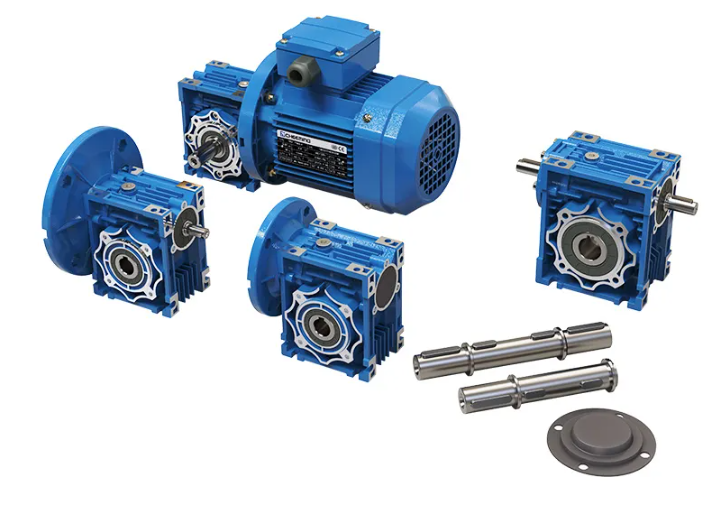
In industrial automation equipment, worm gear reducers are a widely used core transmission component, but oil leakage has always been a common problem that plagues many customers. Today, we will systematically analyze the five core causes of worm gear oil leakage and provide corresponding solutions to help you avoid the problem at its root.
PART 01
Excessive pressure differential: The most easily overlooked "hidden culprit" Oil leakage principleWhen the speed reducer is running, the friction between the worm gear and the worm generates a lot of heat. In the sealed environment of the gearbox, this heat causes air bubbles to form in the lubricating oil, which cannot be discharged smoothly. Long-term operation will cause the temperature of the gearbox and shaft to rise continuously, accelerating the hardening and aging of the oil seal lip; at the same time, the pressure inside the gearbox will continue to rise, eventually resulting in an excessive pressure difference between the inside and outside, causing the lubricating oil to seep out from the oil seal, resulting in oil leakage. SolutionInstall a vent cap at the highest oil level to balance the pressure inside and outside the tank and prevent pressure differential from accumulating.⚠️ Important Reminder: Chuanming reducers are shipped with a sealing screw to prevent oil leakage from the vent cap during transportation. Before use, customers must replace the sealing screw with the vent cap. This is a frequently overlooked detail and a key cause of differential pressure oil leakage.
PART 02
Lubricating oil contamination: "Secondary damage" caused by wear. Oil leakage principleThe structural characteristics of worm gears dictate that their operation is a friction transmission. After long-term operation of the reducer, the worm gear will experience wear, and the resulting metal debris (such as copper powder) will mix into the lubricating oil, causing oil contamination. The contaminated oil will continuously scratch the oil seal lip, impairing the sealing performance of the oil seal and ultimately leading to oil leakage. SolutionRegularly check the contamination of the lubricating oil. If there is too much copper powder or impurities in the oil, replace it with brand new, qualified lubricating oil in time to avoid the impurities from continuously damaging the oil seal.
PART 03
High-temperature environments: a catalyst for accelerated oil seal aging. Oil leakage principleStandard gearboxes are equipped with nitrile rubber skeleton oil seals. Unless otherwise specified, this type of oil seal is only suitable for normal temperature conditions. If the gearbox operates in a high-temperature environment for a long time, the oil seal will age faster and lose its elasticity due to the combined effects of the external environment and its own operating temperature, resulting in a significant decrease in sealing performance and eventually causing oil leakage. SolutionFor high-temperature operating conditions, nitrile rubber oil seals need to be replaced with fluoro rubber oil seals to significantly improve the high-temperature resistance of the oil seals, extend the sealing life, and solve the oil leakage problem caused by high temperature at the root.
PART 04
Misalignment: A direct cause of uneven wear in oil seals Oil leakage principleIf the workpiece shaft connected to the output hole of the reducer is too long, misalignment will occur during operation, causing uneven radial force on the oil seal lip, excessive deformation, and severe uneven wear. This damages the oil seal sealing structure and ultimately leads to oil leakage. This is an installation detail that many customers easily overlook. Solution
A torque arm can be used to correct the installation, offset the force deviation caused by misalignment, and solve the oil leakage caused by misalignment during operation;
Alternatively, a bearing position can be added to the top of the workpiece to improve the concentricity of the shaft system and structurally prevent uneven wear of the oil seal.
PART 05
Insufficient machining precision: the root cause of oil seal wear. Oil leakage principleThe surface finish, hardness, and presence of scratches or dents on the oil seals of the worm gear and worm shaft in a speed reducer directly affect the service life of the oil seals. If the oil seal's machining precision is substandard, its surface is rough, or it has been damaged by impacts, it will accelerate the wear of the oil seal lip, damage the sealing structure, and ultimately lead to oil leakage. This is a processing quality issue inherent to the product itself. SolutionThese types of problems require the speed reducer to be returned to the factory for inspection. Professionals will check the machining accuracy, hardness, and damage of the oil seal, and adjust and repair the problematic parts to solve the oil leakage caused by insufficient precision at its root.Oil leakage in worm gear reducers is never a single problem, but rather requires meticulous attention to detail throughout the entire process of installation, use, and maintenance. From replacing the breather cap at the factory to regular oil changes, high-temperature selection, installation alignment, and product machining precision, every step directly affects the seal life of the reducer.











 XINDA