










Why is the production threshold for RV reducers so high?
The production threshold for RV reducers is extremely high because it is not a breakthrough in a single technology, but a system integration of top-level expertise from multiple industrial fields, including materials science, precision machining, heat treatment processes, assembly technology, and theoretical design. It represents the pinnacle of precision machining in the pure mechanical field; a weakness in any one link can lead to the failure of the final product.
Specifically, its high barriers to entry are mainly reflected in the following core dimensions:
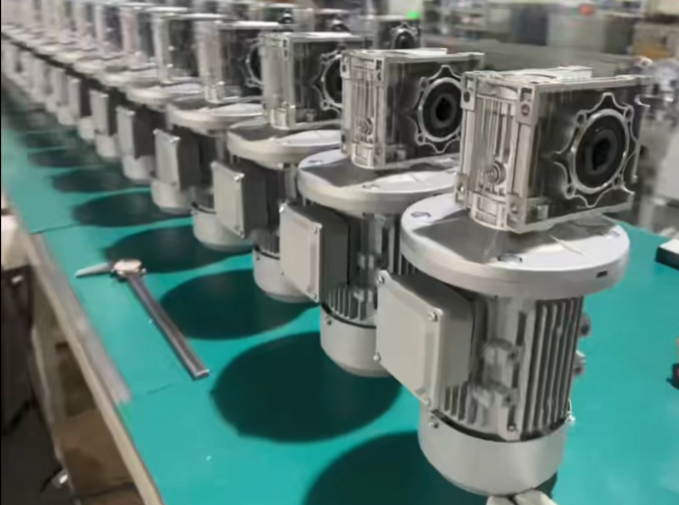
1. Extremely high barriers to entry in theoretical design and shaping techniques.
The RV reducer adopts a composite transmission structure of "one-stage involute planetary gear + two-stage cycloidal pinwheel", and its design difficulty far exceeds that of ordinary gearboxes.
The complex shaping theory: Cycloidal wheels cannot use standard tooth profiles; they must be shaped using equidistant shaping, offset shaping, angular shaping, or combinations thereof to compensate for manufacturing errors and ensure lubrication and uniform force distribution. This shaping process relies on the company's decades-long accumulated confidential database and experience, and is its core know-how.
Strict tolerance allocation: The allowable backlash of the whole machine is usually required to be no more than 1 minute (1/60 degree). This tiny error needs to be reasonably distributed to more than 20 internal parts. At the same time, the thermal deformation, elastic deformation and lubrication clearance of the materials must also be considered, making the design threshold extremely high.
2. Micrometer-level precision machining and heat treatment challenges
The RV reducer contains hundreds of parts, and the core components require micron-level machining precision and are extremely sensitive to heat treatment processes.
Core components are difficult to manufacture:
Cycloidal wheel: Due to its complex and thin structure, it is extremely prone to warping and deformation after heat treatment, making it unsuitable for conventional surface grinding processes. Thermodynamic simulation and selection of specific grinding parameters are required. Its roundness error must be controlled within 0.5μm, and its tooth profile error within 1μm.
Crankshaft and pin gear housing: The bearing hole position and perpendicularity requirements of the crankshaft are extremely high; the needle rolling hole and bearing support hole of the pin gear housing have strict requirements for dimensional accuracy and geometric tolerance.
Heat treatment deformation control: Heat treatment processes such as vacuum carburizing directly determine the hardness (must reach HRC60 or above) and wear resistance of parts. A deviation of a few degrees or minutes in temperature or time can lead to the scrapping of an entire batch. Domestic products still lag behind in controlling the amount of deformation after heat treatment.
3. Dependence on high-end materials and special bearings
Materials are fundamental to the lifespan and reliability of RV reducers, and currently, high-end materials are still heavily reliant on imports.
Special steel: Core components require high-purity special alloy steel to balance high hardness and high toughness. Domestically produced steel previously suffered from high impurity content (once twice that of imported products), resulting in low fatigue strength and a lifespan shortened by more than 30%.
Specialized bearings: RV reducers rely on high-precision thin-walled crossed roller bearings and eccentric crankshaft bearings. More than 60% of high-end products still rely on imported brands such as NSK and NTN from Japan.
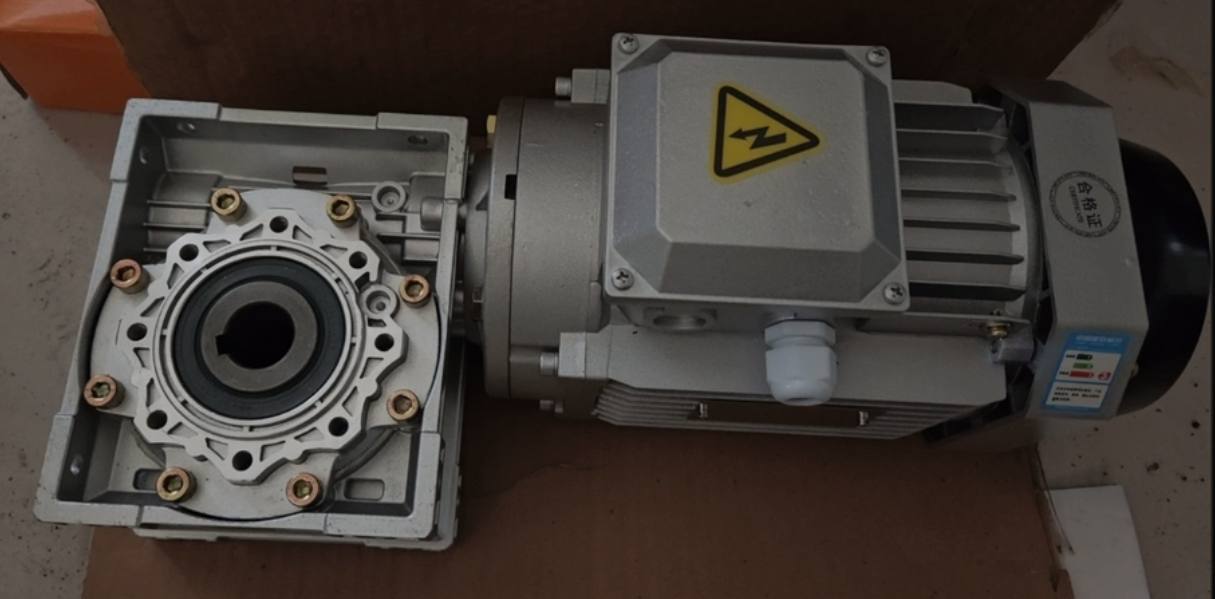
4. Challenges of Ultra-Precision Assembly and Inspection
Even if the parts are manufactured to quality, the assembly process is the crucial "last mile" that determines the final performance.
Extremely high assembly precision: The assembly gap of the entire machine must be controlled within 0.01mm, and the coaxiality of the two-stage transmission must be ≤0.005mm. Manual assembly has large fluctuations in precision and a low pass rate, while fully automated assembly lines require huge investments.
Long testing cycle: Life testing requires simulating more than 10,000 hours of operation. There is still room for improvement in the error rate and testing cycle of domestic accelerated testing equipment. The verification cycle of new products is generally as long as 2-3 years.
5. Heavy asset investment and long-term validation
The RV reducer industry is a typical capital-intensive, long-cycle, hard-tech industry.
High capital threshold: High-end precision machining equipment (such as five-axis linkage gear grinding machines) mainly rely on imports, with an average price of over 15 million yuan per unit. The investment required to set up a production line is at least 200 million yuan.
The R&D and certification cycle is long: it takes 5-10 years of technical accumulation and repeated testing from R&D design to mass production. Downstream robot manufacturers need to go through tens of thousands of hours of stability testing when changing suppliers, forming an ecological barrier of "no customers, no data; no data, no process".
In summary, the high barrier to entry for RV reducers is the result of multiple hurdles, including theoretical design, material processing, precision manufacturing, assembly and testing, as well as financial and time constraints. Although domestically produced RV reducers have made significant breakthroughs in the mid-to-high-end market in recent years, and can rival international giants such as Nabtesco of Japan in high-end heavy-duty, ultra-high precision, and ultra-long lifespan applications, with some indicators even reaching world-class levels.
 XINDA