





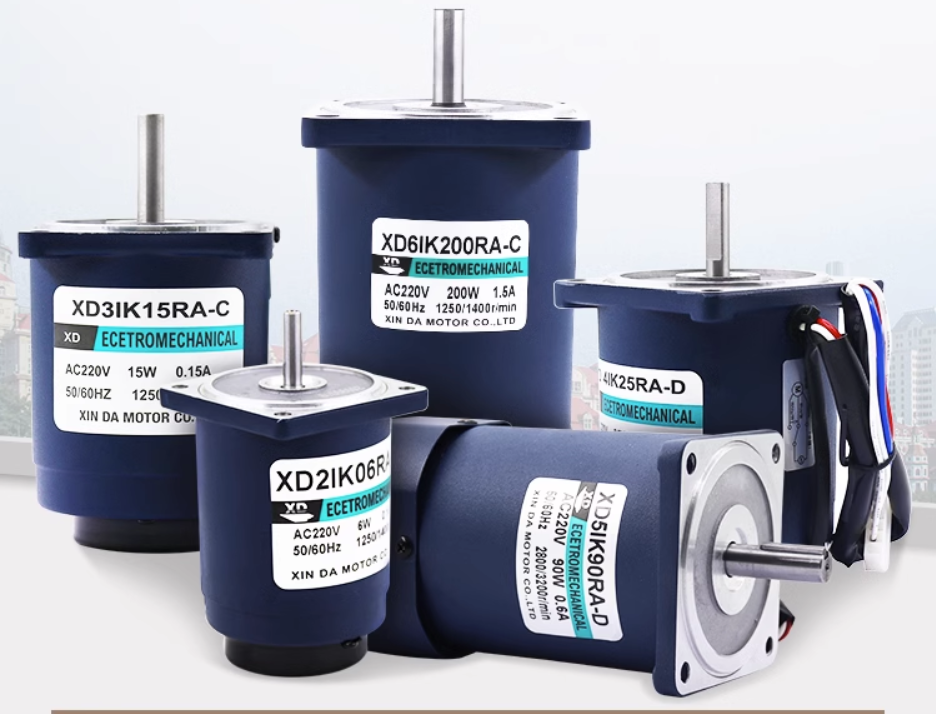












Comparison of optimization effects of skewed slot design for motors with different pole numbers
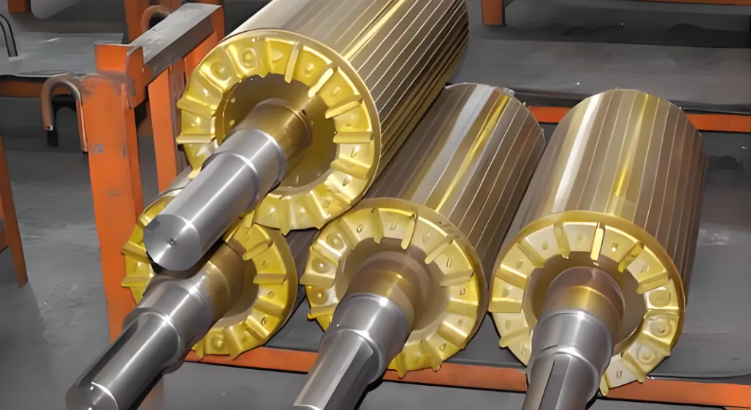
In practice, the effect of motor skew is highly correlated with the number of motor poles. More poles result in better overall harmonic reduction and electromagnetic noise reduction after skew; conversely, fewer poles lead to a less effective skew. This pattern reflects that multi-pole motors are more sensitive to a certain skew angle. For the same mechanical skew angle, more poles correspond to a larger electrical angle, resulting in a more pronounced effect at short distances.
The skewing of slots in motors with different pole numbers aims to reduce tooth harmonics: skewing by one stator tooth pitch theoretically eliminates stator tooth harmonics completely; skewing by one rotor tooth pitch theoretically eliminates rotor tooth harmonics completely. Of course, skewing by two or more stator or rotor tooth pitches has the same harmonic reduction effect as skewing by one stator or rotor tooth pitch, but the reduction effect on the fundamental frequency is significantly different, as are the effects on other harmonics. Therefore, skewing by 1 to 1.5 stator tooth pitches is generally used. Multi-pole motors generally have fewer slots per pole, resulting in a larger electrical angle occupied by each slot in terms of spatial distribution, equivalent to a larger short-pitch coil, thus demonstrating better overall harmonic suppression performance. It should be noted that when the slot skew of a multi-pole motor deviates from the design, the back EMF decreases significantly, and the output torque decreases considerably; a trade-off must be carefully considered during the design phase.
The 4-pole and 6-pole skew slot optimization effects are moderate, which can significantly improve the operating characteristics without significantly sacrificing torque and efficiency, and have the highest overall cost performance.
Two-pole high-speed motors with very few poles exhibit the weakest skew optimization effect, with most even employing straight-slot designs and abandoning skew structures altogether. The cogging harmonics of two-pole motors differ significantly in order from the fundamental frequency, resulting in a more sinusoidal air gap magnetic field and inherently lower cogging torque, thus mitigating existing vibration and noise issues. Furthermore, the high speed of two-pole motors leads to substantial additional iron losses due to the skew effect, reducing the motor's effective output torque. Therefore, high-speed two-pole motors generally do not rely on skew optimization for performance, instead achieving noise reduction and waveform stabilization through optimized slot configurations and segmented magnets.
Overall, the optimization gain of skewed slots for motors exhibits a clear gradient: multi-pole low-speed motors show the best effect, 4/6-pole medium-pole motors show a moderate effect, and 2-pole high-speed motors show the worst effect. In practical designs, multi-pole permanent magnet servo motors must use a skewed slot structure, 4/6-pole general-purpose motors mostly utilize skewed slots to optimize performance, while 2-pole high-speed motors are advised to use skewed slots cautiously or even eliminate them altogether to avoid negative losses affecting motor performance.
 XINDA
XINDA